Showing posts with label research. Show all posts

Wednesday, October 16, 2013

It's mating season people!

I’ve suddenly started noticing colours everywhere, fragrant aromas and soft winds, the purple puff of Pretoria’s Jacaranda filled streets, bees are buzzing and the birds are singing... And many of the songs you hear are mating calls.  Yes, spring and summer signal the arrival of that sexual behaviour in mammals that we call mating season. While it is clearly seen in hares and deer, I am very sceptical to refer to any specific time of the year as that being the human “mating season”. We have an Afrikaans saying that quite appropriately sums this up: Heeltyd speeltyd!
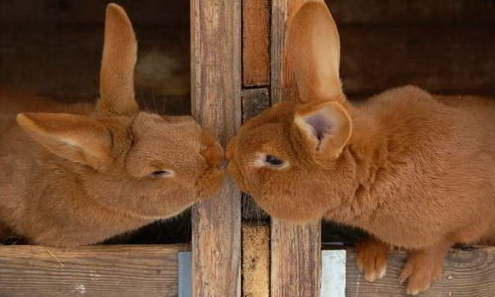
 
Hunny Bunny
However, there is just something about summer, isn’t there? There are some things that we observe which I can’t help but wonder whether these are mating behaviours. How else can we explain the excessive number of love junkies at the moment?

“You’re being bombarded by pleasant, exciting, novel stimuli, and novelty stimulates the neurotransmitter dopamine, which in turn triggers testosterone production,” says Dr. Helen Fischer, a neuroscientist, professor at Rutgers University and author of five books on the science of love. Dopamine is the naturally occurring chemical your brain uses to make you want things. While there are other systems involved in love, when it comes to new love, dopamine is the main culprit. And with enough of it swirling around your system, you're prone to fall in love - and fall hard.

Friends, your body has turned into a dopamine factory. Did you know that brain scans of people flooded with the stuff look a lot like brain scans of drug addicts? I suppose this makes sense, since being high on dopamine feels, as many lovers would put it, euphoric.

Enough with the romance. Let's cut to the real science.

Saturday, May 4, 2013

'Tis the season to fall in love...


In the first quatrain of his 73rd sonnet, Shakespeare used autumn as a metaphor for aging

That time of year thou mayst in me behold
When yellow leaves, or none, or few, do hang
Upon those boughs which shake against the cold,
Bare ruined choirs, where late the sweet birds sang.

But in the face of deterioration and mortality, Shakespeare reminds us, love can not only endure, it can grow stronger.

This thou perceiv'st, which makes thy love more strong,
To love that well which thou must leave ere long

Okay, so maybe you don’t like poetry that much. Maybe you hate it. Maybe you hate it as much as autumn. It is the time for colds and flu and feeling miserable. We are only now starting to approach the half way mark until the end of 2013 and the falling leaves inevitably remind us of the passing of things. It is in this time of year that people all around start feeling depressed. Some even suffer from a form of depression called seasonal affective disorder when the days shorten, the nights get longer and temperatures drop.

Well, Prof. Till Roenneberg, a chronobiologist at the Institute for Medical Psychology in Munich, knows that autumn totally bums people out. What is a chronobiologist? It’s the dude in the white coat that studies a specialized bundle of cells that regulates our cyclical processes or biological rhythms (brought on by example: seasonal changes) and how that affects our physiology and behaviour.

Roenneberg discovered that we bounce back from the cold autumn blues by seeking to create more warmth on the inside. We fight the autumn depression with… falling in love!

You are going to love this.